Blogs & News
We have a lot of ideas and know-how about bags, material sourcing, sampling, production and a whole host of bag-related topics that we would like to share with you.
The Complete Guide to Handbag Straps: Types, Materials & How to Choose the Right One
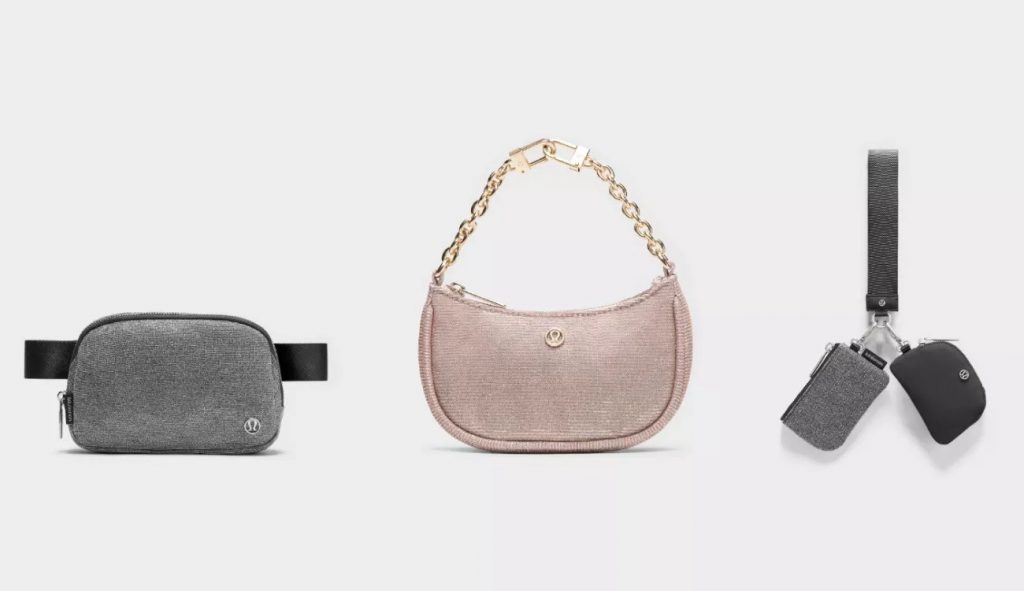
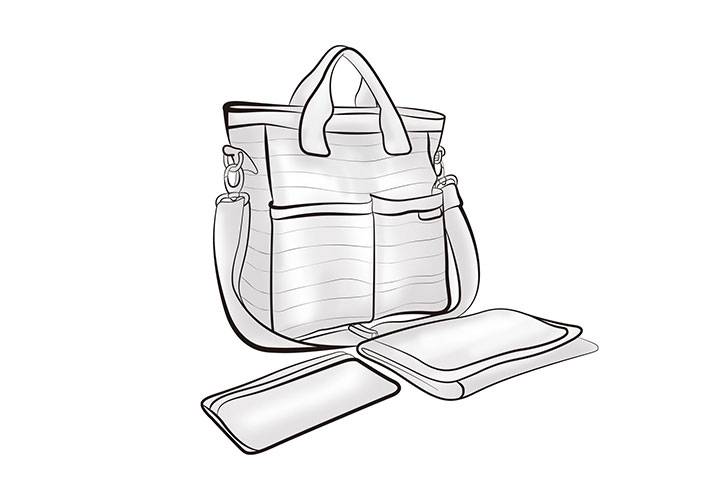
The strap is one of the most important yet often overlooked components of a handbag. Most bags come with one or multiple straps—but do you truly know what they’re called, how to differentiate them, or how to select the right one?
Whether you’re a handbag designer creating new concepts, a consumer replacing or upgrading a strap, or a salesperson who needs product knowledge, this comprehensive guide will teach you everything you need to know about handbag straps.
What Is a Handbag Strap?
A handbag strap is the long, narrow component that allows the user to carry the bag in various ways:
- In the hand
- Around the wrist
- On the shoulder
- Across the body
- On the back
Depending on the design, a handbag may feature one or more straps, which can either be fixed or detachable.
Understanding strap design is essential because the strap directly affects:
- Comfort
- Style
- Functionality
- User experience
- Durability
Common Handbag Strap Materials
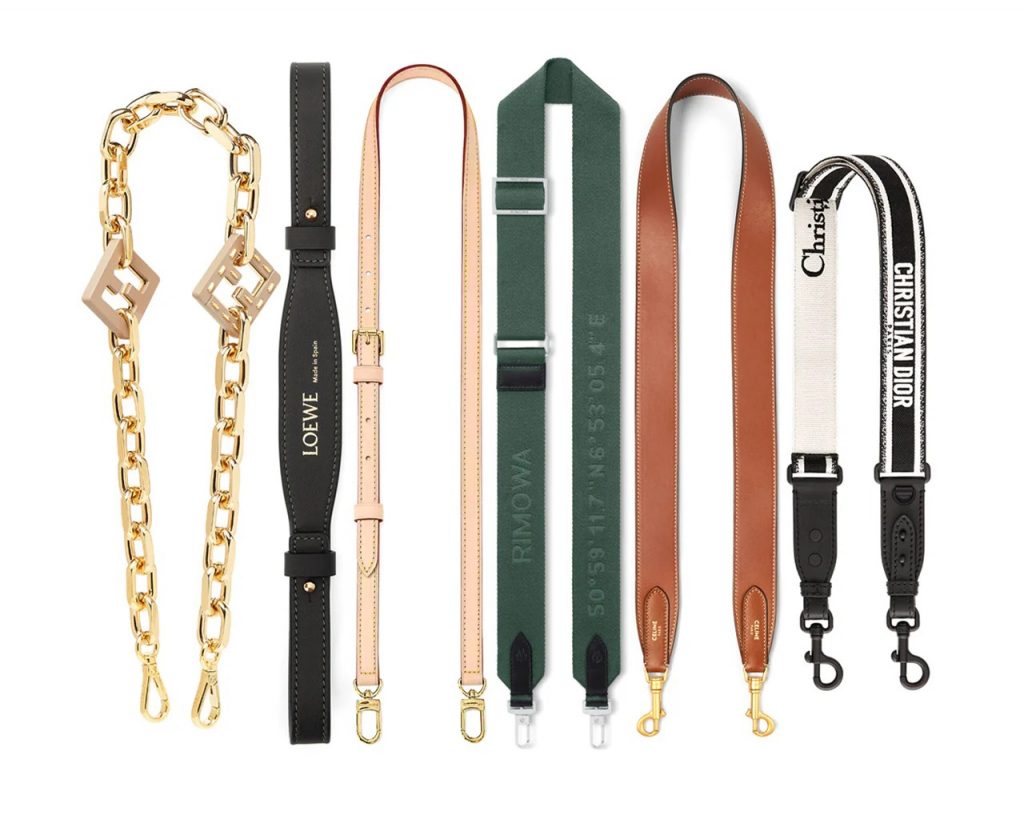
Handbag straps are typically made from three main materials:
1. Shell Fabric Straps
Shell fabric straps are those made from the same material as the bag’s exterior. These are the most common type and include:
- Genuine leather straps
- PU (faux) leather straps
- Fabric straps
Advantages
- Perfect color and material match with the handbag
- Cohesive and high-end visual appearance
- Premium texture and feel (especially leather)
Limitations
Not all materials are suitable for straps. For example:
- Full-grain leather strapscan be very expensive
- Some fabrics are too soft or too stiff, reducing comfort or durability
This is why many designers choose webbing when shell fabric is not ideal.
2. Webbing Straps
Webbing straps are made from woven materials such as:
- Nylon
- Cotton
Most webbing straps come with:
- Adjustment buckles
- Hooks
- Optional printed or jacquard patterns
Advantages
- Wide variety of patterns and colors
- Lightweight and comfortable
- Affordable
- Trendy, especially colorful webbing styles
Limitations
- Perfect color matching with the bag is difficult
- May appear less premium for high-end luxury bags
Despite this, colorful webbing straps have become extremely popular in recent years due to their fashion-forward appeal.
3. Metal Chain Straps
Metal chain straps are commonly used on:
- Evening bags
- Cosmetic bags
- Mini bags
They are usually made with small chain sizes to maintain balance with smaller handbag silhouettes.
Advantages
- High-quality, elegant, and visually striking
- Instantly elevates the handbag’s luxury feel
Limitations
- Generally more expensive
- Length is usually not adjustable
- Can be heavier and less comfortable for long-term wear
Handbag Strap Lengths
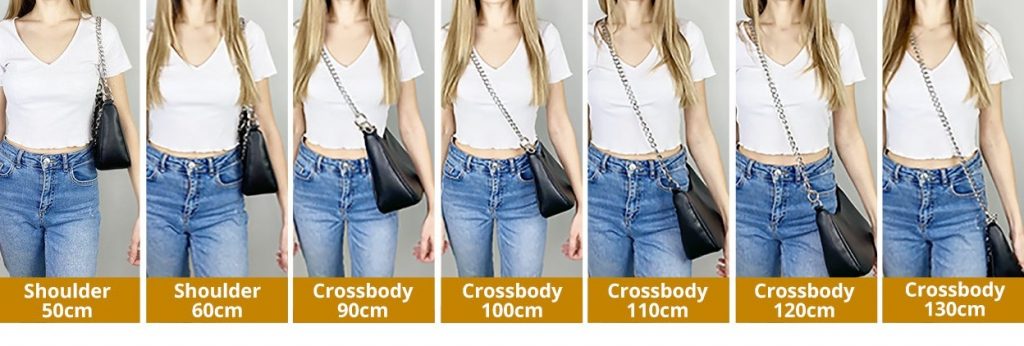
Strap length is measured at its longest point, including hooks or other hardware. If the strap is adjustable, the measurement should be taken with the buckle extended to the maximum length.
Straps can be categorized into three standard lengths:
1. Wrist Straps (6–10 inches)
Important note: For wrist straps, the length is measured after folding in half, not fully extended.
Wrist straps are ideal for:
- Wristlets
- Mini bags
- Clutches
They allow the user to securely hold the bag while freeing the hand.
2. Shoulder Straps (22–35 inches)
Shoulder straps are designed to be worn comfortably on the shoulder.
Commonly used in:
- Tote bags
- Hobo bags
- Medium to large handbags
They provide a balance between function and convenience, allowing the bag to be easily put on or taken off.
3. Crossbody Straps (40–50 inches)
Crossbody straps are designed to free your hands completely.
They are usually equipped with adjustable buckles to fit users of different heights.
Common for:
- Crossbody bags
- Saddle bags
- Mini bags
- Camera bags
Crossbody carrying also reduces pressure on the shoulders due to better weight distribution.
Handbag Strap Widths
Strap width refers to the part that sits on the wrist or shoulder. Generally:
Wider straps = better weight support + more comfort
Narrower straps = lighter visual appearance but less comfortable for heavy bags
Based on SINGYOUNG Leather’s 10+ years of manufacturing experience, the most common widths are:
- 3/8″
- 1/2″
- 3/4″
- 1″
- 1 1/4″
- 1 1/2″
3/8″ & 1/2″ Straps
Best for:
- Clutches
- Wristlets
- Mini bags
3/4″ & 1″ Straps
Most versatile sizes—suitable for almost all handbag types except oversized bags.
1 1/4″ & 1 1/2″ Straps
Ideal for:
- Backpacks
- Large totes
- Travel bags
They can also be paired with small bags for a bold contrast effect. For example, in 2021, one of our customers launched a mini bag with a 1.5″ colorful webbing strap, which quickly became a local bestseller.
Metal Chain Widths
Chain strap widths generally fall under 1 inch, so selecting within the 3/8″ to 1″ range is recommended.
How to Choose the Right Handbag Strap
Now that you understand the materials, lengths, and widths, here are professional guidelines to help you select the right strap.
1. Follow Your Personal Preference
There’s a saying in Chinese: “Love is priceless.”
As a consumer, choose what you genuinely love. As a designer, create what your clients love.
When emotion drives the choice, materials and sizes become secondary.
2. Apply the Consistency Principle
For a harmonious look, choose straps that match your bag in:
- Material
- Hardware color
- Width
- Texture
This creates a polished and professional aesthetic.
3. Use the Contrast Principle Carefully
Contrast can be powerful—but only when used intentionally.
Good contrast example:
- A mini bag paired with a wider strap (but not excessively wide)
Bad contrast example:
- A large tote paired with a very narrow strap → uncomfortable and unbalanced visually
Remember: the smaller the contact area on the shoulder, the more pressure you feel.
Conclusion
This guide covers the essential knowledge about handbag straps—from materials and lengths to widths and styling principles.
If you have more questions or want expert advice, feel free to Contact Us. We’re always happy to share our experience and passion for handbag craftsmanship.
We are SINGYOUNG Leather, one of China’s leading handbag manufacturers with over 10 years of expertise. We provide:
- One-stop design to production services
- Customization for all bag styles
- OEM/ODM services
- Professional development & sampling
- Global shipping support
If you’re looking to wholesale or customize any type of handbag or strap, our team is ready to assist you.