Blogs & News
We have a lot of ideas and know-how about bags, material sourcing, sampling, production and a whole host of bag-related topics that we would like to share with you.
Handbag Packaging: Materials, Workflows, and Smart Branding Strategies
Introduction
Regardless of brand size or market positioning, packaging plays a critical role in the success of handbag brands. It does more than protect products during shipping—it shapes brand perception, elevates the unboxing experience, and directly influences customer satisfaction and repeat purchases.
With over 10 years of export and manufacturing experience, SINGYOUNG has seen brands succeed through thoughtful packaging strategies—and others suffer losses by prioritizing cost over quality.
In this guide, we focus on:
- Essential handbag packaging materials
- Practical packaging workflows for different brand types
- Smart customization strategies
- Cost-effective and sustainable packaging solutions
This article is designed to help brand owners, designers, and product managers make informed packaging decisions.
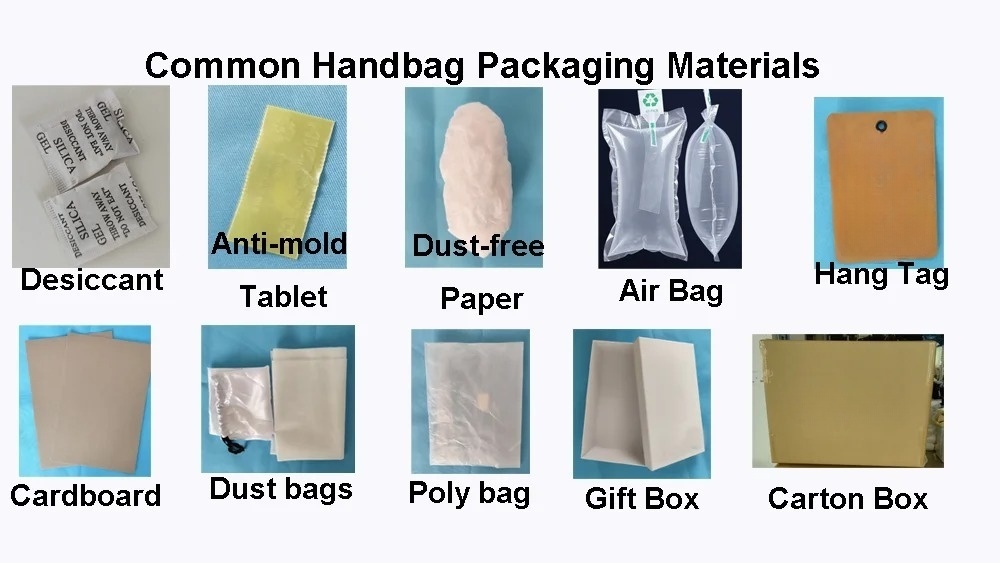
Common Handbag Packaging Materials
Handbag packaging consists of internal protection, external presentation, and shipping materials. Not every brand needs all options—flexibility is key.
Internal Packaging Materials
- Desiccant / Anti-mold tablets: Prevent moisture and mold during long-distance shipping.
- Internal padding (paper or air pillows): Maintains bag shape and prevents deformation, especially for structured bags.
External Packaging Materials
- Hardware protective film: Prevents scratches on metal components.
- Hang tags & stickers: Provide product information and support warehouse operations; well-designed tags enhance brand recognition.
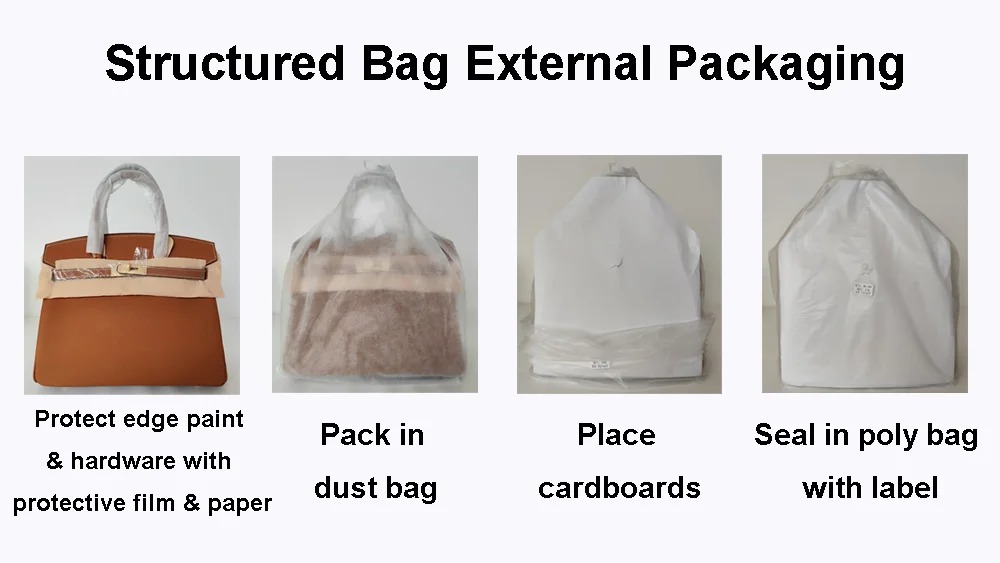
- Cardboard sheets: Protect structured bags from external pressure.
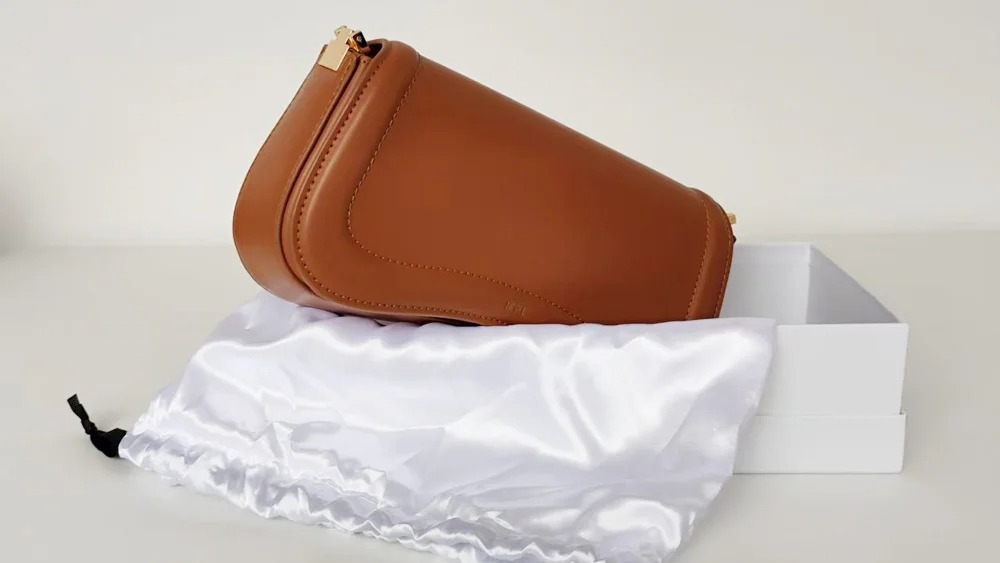
- Dust bags: Made from non-woven fabric, canvas, cotton, velvet, or satin; protect handbags and reinforce brand value.
- Poly bags: Protect against water, dirt, and mishandling during logistics.
- Gift boxes: Premium packaging for mid-to-high-end brands.
- Ribbons: Decorative elements that enhance luxury perception.
- Carton boxes: Corrugated shipping boxes for storage, logistics, and distribution.
Choosing the right combination depends on product structure, brand positioning, budget, and sustainability goals.
The Role of Packaging: Beyond Protection
1. Protection
High-quality packaging ensures handbags arrive in perfect condition, protecting:
- Leather surfaces
- Hardware
- Shape and structure
- Against moisture, dust, and impact
This is especially important for ocean freight and long storage periods.
2. Brand Expression
Packaging is an extension of brand identity.
- Luxury brands emphasize premium materials and finishes
- Sustainable brands highlight eco-friendly packaging
- Consistent visual identity reinforces brand recognition
Every unboxing is a branding moment.
3. Customer Experience
Thoughtful packaging creates emotional value.
A well-designed gift box or fabric dust bag can:
- Increase perceived value
- Encourage social sharing
- Improve customer loyalty
- Drive repeat purchases
Three Practical Packaging Workflows for Different Brands
1. Fast Fashion & Mass Market Brands
Goal: Cost control + basic protection
Typical workflow (soft bags):
- Anti-mold tablet
- Hang tag & sticker
- Optional non-woven dust bag
- Poly bag
- Bulk packed in cartons
Structured bags require additional paper stuffing to prevent deformation. Skipping this often results in unsellable products after transport.
2. Mid-to-High-End Brands (Gift Box Packaging)
Goal: Brand image + premium experience
Typical workflow:
- Paper stuffing
- Anti-mold protection
- Multiple hang tags (info + care)
- High-quality dust bag (silk or velvet)
- Custom-size gift box
- Outer carton for shipping
Key tip: Gift box quality directly affects brand perception. Boxes should allow ~2cm internal clearance for optimal presentation and protection.
3. E-Commerce & Warehouse-Ready Packaging
Goal: Fast fulfillment + accuracy
Typical workflow:
- Paper stuffing (structured bags only)
- Anti-mold tablet
- Hang tag & sticker
- Optional dust bag
- Poly bag with external label
- Individual courier box
- Outer master carton
Critical tip: Ensure labels match the contents exactly—labeling errors lead to returns, refunds, and negative reviews.
Customization & Branding: Where to Invest Wisely
Not all packaging elements need customization from day one.
Recommended Customization Priorities
- Hang tags & stickers: Low MOQ, high branding value
- Dust bags: Strong visual impact; reusable and premium
- Poly bags: Transparent with printed logo and safety warning
- Gift boxes: Best for premium positioning
- Carton boxes: Useful for logistics and brand visibility
Items Not Recommended for Customization
- Internal padding paper
- Air pillows
Printed padding can transfer ink due to heat and humidity during shipping.
Packaging Customization: 4-Step Process
- Prepare design files(AI / PSD, CMYK or Pantone, 1:1 scale PDF)
- Sample production(1–2 weeks)
- Review & confirmation
- Mass production(1–4 weeks depending on material)
Important: Packaging design should begin together with handbag production, not after.
Sustainable Packaging: Practical & Affordable Choices
Sustainability is no longer optional.
Smart Eco-Friendly Solutions
- Recycled paper for hang tags, boxes, and cartons
- FSC-certified materials
- Fabric dust bags instead of poly bags
- Soy-based or plant-based inks
- Minimalist printing and coatings
Eco-friendly packaging enhances brand value while remaining cost-effective when planned correctly.
Conclusion
Handbag packaging is not an afterthought—it’s a strategic tool that affects product protection, brand image, customer experience, and sustainability.
By choosing the right materials, workflows, and customization strategies, brands can:
- Reduce losses
- Improve customer satisfaction
- Strengthen brand identity
- Support sustainable development
Thoughtful packaging elevates not just the handbag—but the entire brand experience.
If you plan your next custom handbag project, start with the right packaging strategy. That’s where lasting brand value begins.