Blogs & News
We have a lot of ideas and know-how about bags, material sourcing, sampling, production and a whole host of bag-related topics that we would like to share with you.
From Perfect Sample to Flawed Bulk: What Went Wrong?
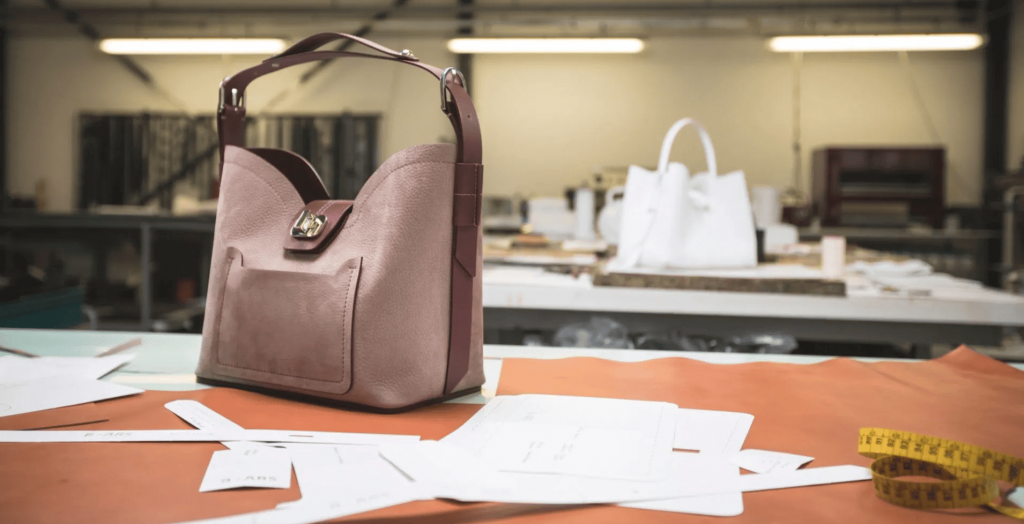
Every handbag designer or DTC brand has experienced this frustration: The sample looks stunning — but once mass production starts, the result becomes completely different. Color mismatch. Uneven edges. Loose straps. Shape collapsing. Crooked stitching. Why does it happen?
This article reveals why beautiful bags “fail” during mass production and how professional manufacturers prevent disasters — helping brands avoid returns, complaints, and reputation damage.
Why This Topic Matters
Consumers today are more sensitive to:
- Stitching alignment
- Bag shape & hardness
- Hardware smoothness and shine
- Environmental materials
- Brand presentation
Yet 90% of OEM factories cannot replicate a premium sample during bulk production, especially with complex fashion bags.
Before you place your PO (purchase order), understanding the risks can save thousands of dollars.
Top 6 Reasons Why a “Good-Looking Bag” Collapses in Bulk Production
1、Handcrafted Samples ≠ Automated Mass Production
Samples are usually: ✔ Made by senior prototype masters ✔ 100% hand-crafted ✔ Sewn slowly with perfection
But bulk goods are: ✘ Made by production-line workers ✘ Speed-oriented ✘ Dependent on tools & fixtures
If SOP & jigs aren’t standardized → each bag looks different.
2、Materials Change After Scale-Up
Sample makers use:
- Best selected leather pieces
- Premium soft padding
- Hand-trimmed edges
Mass production uses:
- Full sheet PU / leather (hardness varies)
- Bulk foam sheets that may compress differently
- Roll-material tolerance ±0.2–0.5mm
Result: shape collapse, wrinkling, color tone mismatch.
3、Hardware Supply Chain Is Unstable
Zippers, chains, hooks, logo plates often come from 4–8 different suppliers.
If vendor A delivered copper alloy + electroplated gold, but vendor B submits zinc alloy with imitation plating →
Your sample = luxury look Your bulk = cheap imitation feel
4、Edge Paint Appears Perfect on Sample but Cracks in Bulk
Common bulk issues:
- Cracking within 2 weeks
- Uneven thickness
- Rough edges / bubbles
Skipping steps saves time, but kills quality
5、Lack of QC Checkpoints
Most factories only check: Quantity ,Outerlook
But premium bags require:
Stitch count per inch control (SPI) , Handle weight-bearing test , Color-transfer rubbing test ,Drop test , Hardware salt-spray test
Without QC — bulk output = gambling
6、Complex Fashion Designs Are NOT Designed for Production
Designers often create bags that look great, but structurally:
- Too many curves / folds
- Straps attached at weak points
- Internal support missing
- No seam allowance space
Production difficulty = exponential failure risk
How Top-Tier Manufacturers Prevent Mass-Production Failure
Below are factory-level solutions that guarantee the bulk bags match the sample:
1、DFM (Design for Manufacturability) Review:Factory engineers review drawings to ensure shape stability & sewing feasibility
2、Material Compatibility Testing:Leather + padding + edge paint testing before final approval
3、Production SOP Standardization:Stitch length, pressure, bending angle written into SOP
4、QC in 4 Stages:Incoming materials → In-line → Finished product → Random AQL
5、Hardware & Leather Batch Number Control:Prevents mismatched tones & shapes
Final Thoughts
A beautiful sample does not guarantee beautiful mass production. What decides success is engineering, QC, material control, and standardized production systems.
If you are a handbag brand, wholesaler, or designer and want:
- Stable quality at scale
- OEM + ODM design-to-production service
- Eco-friendly material option
- Sample-to-bulk consistency
Contact our factory to request PPS samples or a quotation.